
In the modern digital landscape, businesses are no longer competing only with local brands or nearby stores. They are competing with thousands of websites, ads, and content pieces fighting for attention on search engines and social platforms. To survive and grow in this competitive environment, businesses must adopt powerful and proven digital marketing strategies. Among all available options, SEO and PPC marketing stand out as the most effective ways to attract targeted traffic, generate leads, and increase sales.
This comprehensive guide explains everything you need to know about SEO and PPC marketing, including how they work, their differences, advantages, challenges, costs, strategies, tools, and why combining both is the smartest approach for long-term digital success.
What Is Digital Marketing and Why SEO and PPC Matter?
Digital marketing refers to promoting products or services using online channels such as search engines, social media, websites, email, and paid advertising platforms. Reaching the right audience with the right message at the right moment is the ultimate goal of digital marketing.
Among all digital marketing channels, search engines play a critical role because:
People actively search for solutions
Search traffic has high intent
Conversions are higher compared to passive platforms
This is where SEO and PPC marketing become essential.
Understanding SEO Marketing in Detail
What Is SEO?
SEO (Search Engine Optimization) is the process of optimizing a website so that it ranks higher in organic (unpaid) search engine results. SEO focuses on improving visibility when users search for keywords related to your business.
Unlike paid ads, SEO does not involve paying for clicks. Instead, it focuses on building authority, relevance, and trust over time.
How Search Engines Work
Before understanding SEO strategies, it’s important to know how search engines like Google work:
Crawling – Search engines discover new and updated pages
Indexing – Pages are stored in a database
Pages are rated according to their quality and relevancy.
SEO ensures your website performs well in all three stages.
Core Components of SEO
1. Keyword Research
You may find out what your target audience is looking for by conducting keyword research. Effective SEO begins with understanding search intent.
Types of keywords:
Informational keywords
Navigational keywords
Transactional keywords
Commercial intent keywords
2. On-Page SEO
On-page SEO focuses on optimizing individual pages.
Key elements include:
Title tags
Meta descriptions
Headings (H1, H2, H3)
Keyword placement
Internal linking
Image optimization
3. Technical SEO
Technical SEO ensures search engines can crawl and index your site easily.
Important factors:
Website speed
Mobile responsiveness
Secure HTTPS
XML sitemaps
Structured data
4. Content Marketing
High-quality, valuable content is the backbone of SEO. Blogs, guides, videos, and case studies help build authority.
5. Off-Page SEO
Off-page SEO focuses on backlinks and brand mentions.
Key factors:
High-quality backlinks
Domain authority
Social signals
Online reputation
Benefits of SEO Marketing
SEO offers long-term advantages:
Sustainable organic traffic
Higher trust and credibility
Better user experience
Lower cost per lead over time
Strong brand authority
For companies looking to expand over the long run, SEO is perfect.
Understanding PPC Marketing in Detail
What Is PPC Marketing?
In the internet advertising technique known as PPC (Pay-Per-Click), marketers pay a fee each time their ad is clicked. Instead of earning traffic organically, you buy traffic through advertising platforms.
The most popular PPC platform is Google Ads, but PPC also includes social media ads.
How PPC Advertising Works
PPC operates on an auction system:
Advertisers bid on keywords
Ads are shown based on bid and quality score
You pay only when someone clicks
Popular PPC Platforms
Google Ads (Search, Display, Shopping)
YouTube Ads
Facebook Ads
Instagram Ads
LinkedIn Ads
Twitter Ads
Core Components of PPC Campaigns
1. Keyword Selection
Choosing the right keywords determines success or failure.
2. Ad Copywriting
Compelling headlines and descriptions improve click-through rates.
3. Landing Pages
Optimized landing pages increase conversions and reduce ad costs.
4. Bidding Strategy
Manual or automated bidding helps control ad spend.
5. Audience Targeting
Target users by:
Location
Age
Interests
Behavior
Device
Time
Benefits of PPC Marketing
PPC offers immediate advantages:
Instant visibility
Fast lead generation
High targeting accuracy
Budget control
Measurable ROI
PPC is ideal for quick results and campaigns.
SEO vs PPC Marketing: A Detailed Comparison
Feature
SEO
PPC
Cost
Time investment
Paid per click
Speed
Slow results
Immediate results
Traffic
Organic
Paid
Trust
High credibility
Lower trust
Sustainability
Long-term
Short-term
Control
Limited
Full control
Why SEO and PPC Marketing Work Better Together
Using SEO and PPC marketing together creates a powerful, balanced digital strategy.
Key Advantages of Combining SEO and PPC
1. Maximum Search Visibility
Brand confidence is increased when it appears in both organic results and paid advertisements.
2. Better Keyword Insights
PPC data helps identify high-converting keywords for SEO.
3. Improved Conversion Rates
Multiple touchpoints increase conversion probability.
4. Risk Reduction
If SEO rankings drop, PPC maintains traffic.
5. Smarter Budget Allocation
Use PPC short-term, SEO long-term.
SEO and PPC Marketing Strategy for Businesses
Step-by-Step Combined Strategy
Start with PPC for immediate leads
Analyze keyword performance
Build SEO content around high-converting keywords
Improve landing pages using PPC insights
Reduce PPC spend as organic rankings improve
SEO and PPC Marketing for Small Businesses
Small businesses benefit greatly from a hybrid approach:
PPC generates early leads
SEO builds authority
Budget remains controlled
Competition becomes manageable
Local SEO combined with location-based PPC works exceptionally well.
SEO and PPC Marketing for E-Commerce
E-commerce businesses use:
SEO for product pages and blogs
PPC for shopping ads and retargeting
Data-driven decisions for higher ROI
Common Mistakes in SEO and PPC Marketing
SEO Mistakes
Keyword stuffing
Ignoring mobile users
Poor content quality
Buying low-quality backlinks
PPC Mistakes
Poor targeting
Weak landing pages
Ignoring quality score
No conversion tracking
Tools for SEO and PPC Marketing
SEO Tools
Google Search Console
Google Analytics
Ahrefs
SEMrush
Ubersuggest
PPC Tools
Google Ads
Keyword Planner
Google Tag Manager
Facebook Ads Manager
Measuring SEO and PPC Performance
SEO Metrics
Organic traffic
Keyword rank
PPC Metrics
Click-through rate (CTR)
Cost per click (CPC)
Conversion rate
Quality score
Return on ad spend (ROAS)
Future Trends in SEO and PPC Marketing
AI-powered search
Voice search optimization
Automation in PPC
Data-driven personalization
Privacy-focused targeting
Early adaptation will provide businesses a competitive edge.
Advanced SEO and PPC Marketing Techniques for Higher ROI
Once the basics of SEO and PPC marketing are in place, businesses can move to advanced strategies to maximize performance and return on investment. Advanced optimization focuses on data, user behavior, automation, and continuous testing.
Advanced SEO Techniques
1. Search Intent Optimization
Modern SEO is no longer about keywords alone. Google prioritizes search intent—what the user actually wants.
Types of intent:
Informational (learn something)
Commercial (compare options)
Transactional (buy now)
Optimizing content to match intent improves rankings and conversions.
2. Topic Clusters and Semantic SEO
Instead of ranking for one keyword, businesses should build topic clusters.
A pillar page targets a broad keyword like SEO and PPC marketing, while supporting blogs cover related subtopics.
This improves:
Internal linking
Topical authority
Crawl efficiency
3. Core Web Vitals Optimization
Google now measures user experience through Core Web Vitals:
Loading speed
Interactivity
Visual stability
Optimizing these improves both rankings and user satisfaction.
Advanced PPC Techniques
1. Smart Bidding and Automation
Google Ads uses AI-driven bidding strategies such as:
Target CPA
Target ROAS
Maximize conversions
Automation helps advertisers scale campaigns efficiently.
2. Audience Segmentation
Advanced PPC campaigns segment users based on:
Website behavior
Purchase history
Engagement level
This allows highly personalized ads and higher conversion rates.
3. Retargeting and Remarketing
Retargeting shows ads to users who already interacted with your brand.
These users are more likely to convert, making remarketing one of the most profitable PPC strategies.
Role of Content in SEO and PPC Marketing
Content plays a crucial role in both SEO and PPC marketing.
For SEO:
Blog posts rank for keywords
Content earns backlinks
Long-form content builds authority
For PPC:
High-quality landing pages reduce cost per click
Clear messaging improves quality score
Trust-building content increases conversions
A strong content strategy improves both organic and paid performance.
Budget Planning for SEO and PPC Marketing
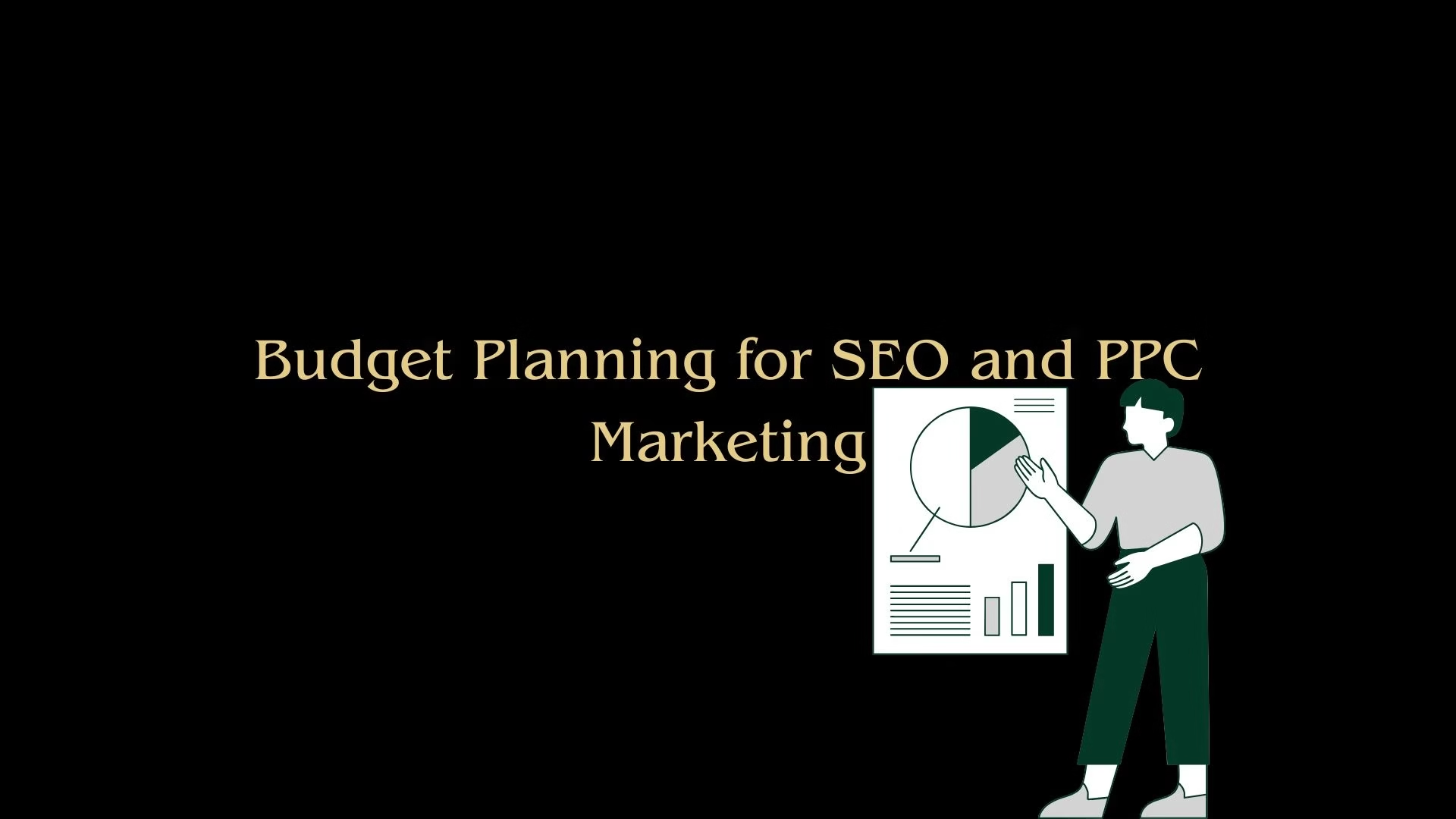
A common question businesses ask is how to allocate budget between SEO and PPC.
Recommended Budget Split:
New businesses: 60% PPC, 40% SEO
Growing businesses: 50% PPC, 50% SEO
Established brands: 30% PPC, 70% SEO
This balance changes based on goals, competition, and industry.
SEO and PPC Marketing for Long-Term Brand Growth
Beyond traffic and leads, SEO and PPC marketing contribute to brand building.
Repeated visibility builds trust
Consistent messaging increases brand recall
Search presence positions your brand as an authority
Businesses that invest consistently gain a strong competitive advantage.
Conclusion: Building a Scalable SEO and PPC Marketing System
To succeed online, businesses must think beyond short-term campaigns. SEO and PPC marketing together create a scalable system that drives traffic, leads, and revenue at every stage of growth.
SEO builds the foundation.
PPC accelerates results.
Together, they create long-lasting digital success.
A data-driven, user-focused approach to SEO and PPC marketing ensures not just visibility—but profitability.
Final Thoughts
SEO and PPC marketing are not rivals — they are partners.
SEO builds trust, authority, and long-term traffic, while PPC delivers instant visibility and fast conversions. Together, they form a complete digital marketing strategy that drives consistent growth.
Whether you’re a startup, small business, freelancer, or established company, investing in SEO and PPC marketing is one of the smartest decisions you can make for your online success.
visit fore more blogs